From Metrics to Meaning: What the Chief Transformation Officer Exchange in Dallas Revealed About the Future of Change
- Published Date: May 6, 2026
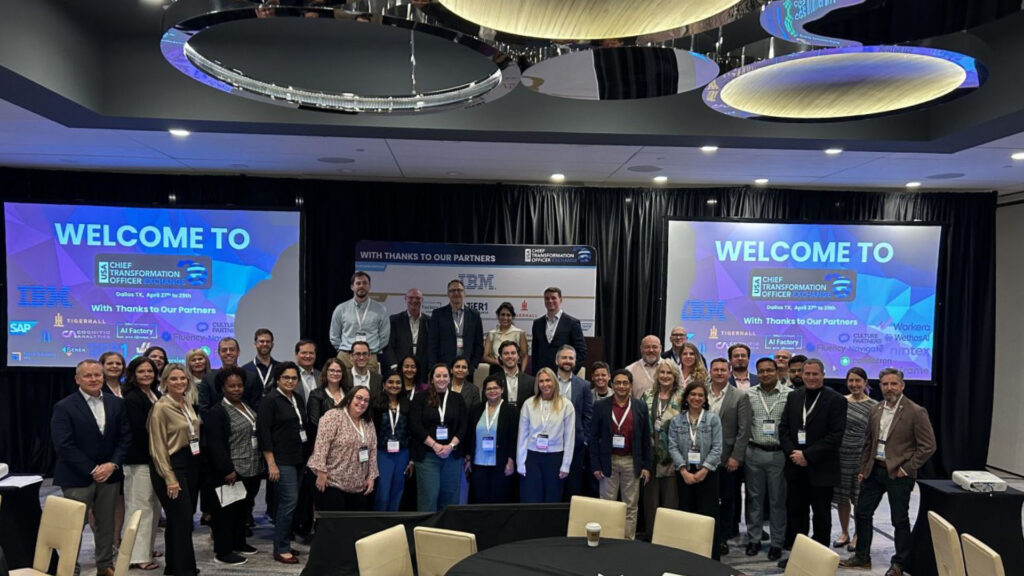
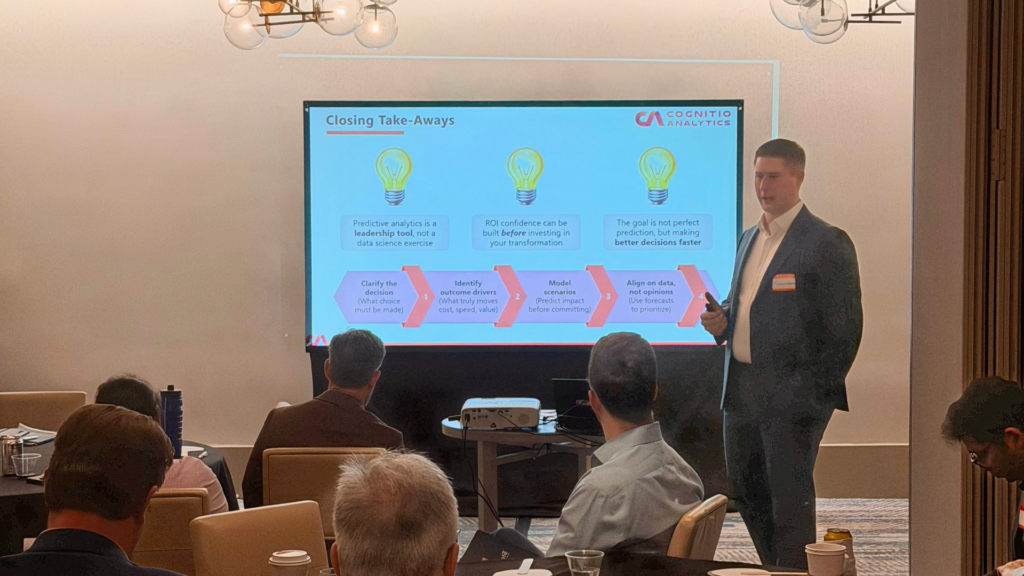
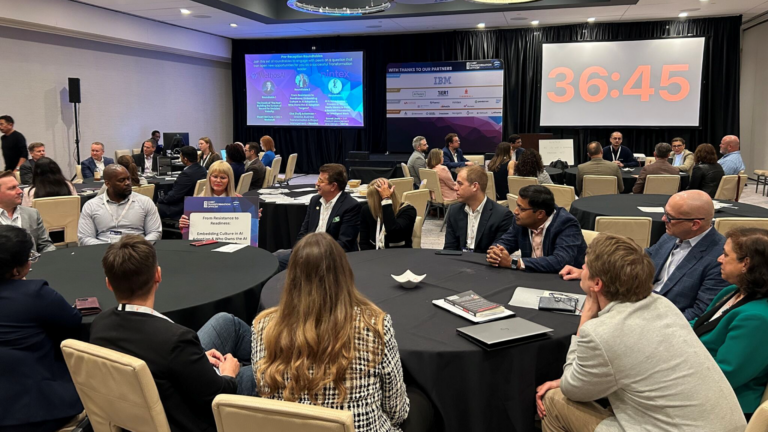
From April 27–29, transformation leaders from across industries gathered in Dallas for the Chief Transformation Officer Exchange. Cognitio Analytics was proud to sponsor the event and to open the conference with a hands-on workshop exploring a question that sits at the heart of modern transformation efforts:
How do leaders move from ambition and intuition to confidence and measurable impact when the stakes are high and the system is complex?
Over two and a half days, one theme became impossible to ignore. Transformation is no longer primarily a technical challenge. It is a human one, supported by data, sharpened by analytics, and sustained by trust.
Predictive Analytics as a Living Capability, not a Static Business Case
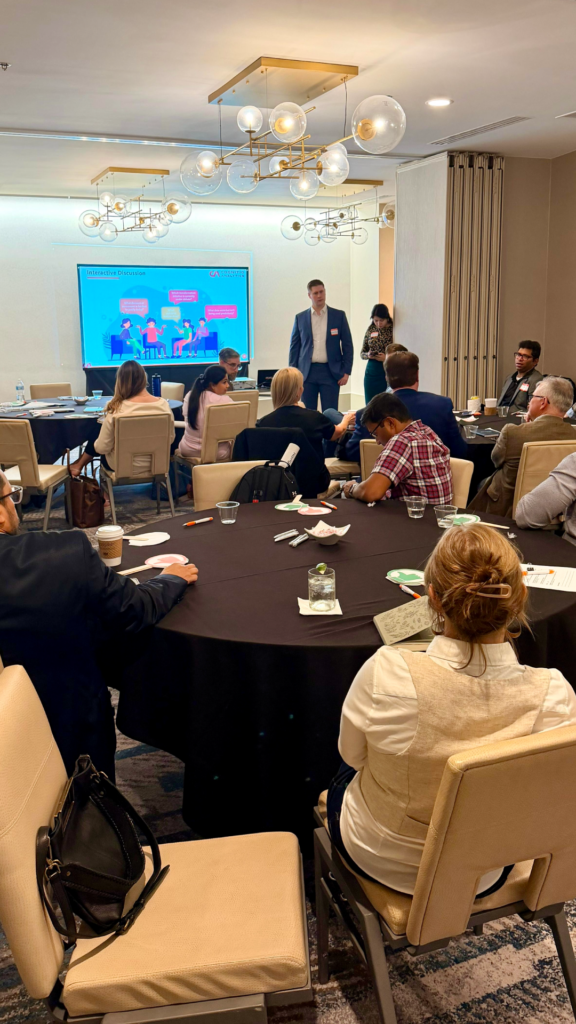
Cognitio kicked off the exchange with a workshop titled “From Metrics to Meaning: Predicting ROI in Complex Business Transformation.” The focus was not on dashboards or retrospective reporting, but on how organizations can use historical data, predictive models, and simulation to reduce uncertainty before committing to large-scale change.
What resonated most strongly with participants was a shift in mindset. Predictive analytics is often treated as a one-time justification tool; something built to secure funding and then set aside. The discussion made clear that this approach undercuts its true value.
Leaders emphasized the importance of continuously revisiting the assumptions that sit beneath transformation models. Markets move. Regulations shift. Events occur that no scenario planner anticipated. When predictive models are designed to ingest live data and evolve over time, they enable leaders to reassess probability, adjust direction, and build real confidence in decision-making.
A participant described scenario planning as an “insurance policy” for transformation. Preparing for multiple futures may feel expensive or slow at the outset, but it dramatically increases resilience when conditions change. In that light, predictive analytics becomes less about proving a single outcome and more about understanding the range of outcomes an organization must be ready to manage.
The Middle Layer: Where Transformation Accelerates or Stalls
Across panels and informal conversations, attention repeatedly returned to one group: middle management.
Middle managers are often expected to translate strategy into reality while carrying the operational burden of day-to-day work. Yet they are frequently under-resourced, excluded from early change planning, or given polished narratives instead of real context.
Leaders at the exchange were direct about the risks of this approach. When transformation efforts are always reported as “on track,” it often signals a lack of transparency rather than success. Hidden issues surface later as resistance, shadow processes, or manual workarounds (often discovered through spreadsheets that quietly replace broken workflows).
Several practical insights surfaced:
- Change initiatives require relentless repetition of purpose and vision, not one-off communications.
- Psychological safety is not a soft concern; it directly affects whether people surface risks early or conceal them.
- Celebrating progress publicly matters, but so does normalizing failure. One proposed metric sparked particular interest: the number of experiments intentionally abandoned. It reframes failure as learning and reinforces a culture of rapid iteration.
Transformation, the group agreed, does not fail in the strategy deck. It fails in the middle, when people are overloaded, unconvinced, or unheard.
Resistance Is Data, Not Defiance
A recurring reframing throughout the exchange was the nature of resistance. Rather than viewing it as an obstacle to overcome, speakers repeatedly described resistance as a rational response: a calculation of cost, risk, and personal impact.
Several leaders shared approaches that treat skepticism as an asset. One method discussed involved actively engaging the toughest critics early, challenging them to surface weaknesses, and requiring explicit feedback.
This does not slow transformation down. When done well, it speeds it up because accuracy is what drives momentum, not pressure.
This idea showed up again and again: transformation moves faster when it acknowledges reality rather than attempting to overpower it. Diagnosing the true cost of change on the workforce (time, learning burden, uncertainty) allows organizations to design interventions that people can actually absorb.
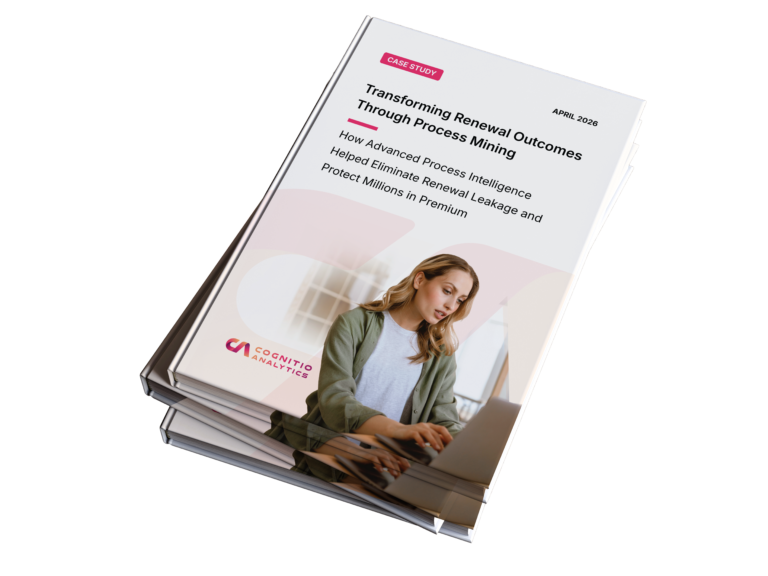
Transforming Renewal Outcomes Through Process Mining
A leading U.S. insurance company uncovered hidden process failures that were driving millions in lost premium and fixed them with process intelligence.
The Hackathon That Changed the Conversation
One of the most discussed moments of the exchange was the hackathon. Senior transformation leaders were placed into small groups, given a messy real-world scenario, and asked to design not for technology or process, but for the human experience of change.
What followed was telling. For the remainder of the conference, hallway conversations and presentations kept circling back to what participants felt in that room. The tools were familiar. The frameworks were known. The challenge sat elsewhere.
As one executive put it, transformation leaders may be hired for digital agendas, but the real work is leading people. Another reflected that their organization had invested heavily in capabilities that looked impressive on paper, while underinvesting in the skills required to navigate trust, identity, power, and loss.
The insight was sobering and energizing: the work that compounds over time lives in the human dynamics that no playbook can fully predefine.
Trust Sets the Speed of Transformation
If there was a single word that cut across AI discussions, governance debates, and talent conversations, it was trust.
Trust determines whether people believe success claims.
Trust determines whether resistance is voiced early or buried.
Trust determines whether technology adoption translates into behavioral change.
Multiple speakers highlighted a familiar trap: declaring victory when a system goes live, even though the organization itself has not yet changed. This creates what some described as an “authority gap,” where no one is clearly accountable for outcomes once implementation ends.
True transformation requires someone willing to own results, not just delivery milestones, and to sit at the intersection of governance, alignment, and decision-making. Without that ownership, even the most advanced tools struggle to deliver value.
What This Means for Transformation Leaders and Their Partners
The Dallas exchange made one thing clear. The Chief Transformation Officer role is evolving rapidly. The past decade rewarded technical translation: managing portfolios, aligning roadmaps, and orchestrating delivery. Those capabilities still matter but they are no longer sufficient.
Today’s most effective transformation leaders operate much closer to the ground. They spend time where friction exists. They treat resistance as insight. They use data not to end debate, but to focus it. And they recognize that execution is hard by nature; not because organizations are failing, but because work is complex.
For organizations like Cognitio Analytics, this shift reinforces our belief that analytics must serve decision confidence, not just measurement. Predictive models, scenario simulations, and ROI forecasts are powerful but only when they are designed to adapt, to surface uncertainty, and to support the deeply human work of transformation.
The title may say transformation.
The tools may be digital.
But the work is, increasingly, human.
And that is where the future of change will be won.
Conclusion: Simulation Turns Process Intelligence into Business Intelligence
Our case study proves a critical truth:
Insight alone doesn’t create transformation. Thoughtful solution design based on simulation does.
By combining:
- Process mining for visibility
- Machine learning for prediction
- Simulation for outcome modeling
- Financial analysis for decision-making
Organizations move from reacting to problems to engineering outcomes. For the bank, that meant doubling mortgage origination revenue. For your organization, the impact could be even greater.
Reach out to us to learn how we can assist you.
Explore the Latest
Discover trends and strategies shaping smarter, faster business processes.